




Medial Epicondyliti
Expert Treatment for Golfer’s Elbow and Tendon Irritation
Golfer’s Elbow — medically known as Medial Epicondylitis — is a painful overuse injury affecting the tendons that attach to the inner side of the elbow. It commonly develops from repetitive wrist and forearm motion, gripping, or lifting, and is not limited to golfers. At iMsk & Spine Group, we understand how much this condition can disrupt work, sports, and daily tasks. Our team provides warm, individualized care to relieve pain, restore strength, and prevent recurrence so you can get back to the activities you enjoy.
What Is Golfer’s Elbow?
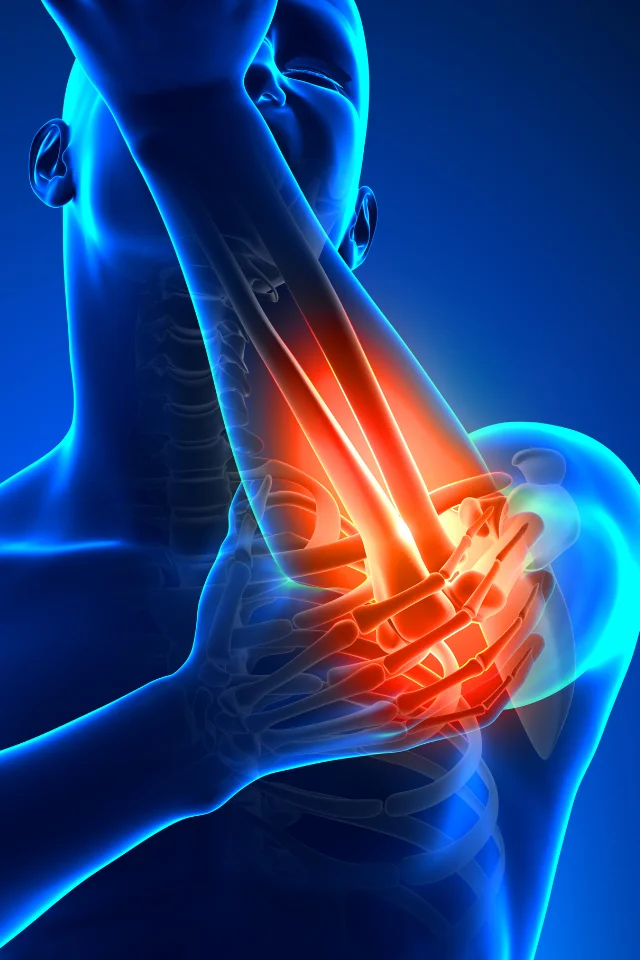
Golfer’s Elbow occurs when the tendons responsible for bending the wrist and gripping objects become irritated, inflamed, or damaged. These tendons attach to the medial epicondyle — the bony bump on the inside of the elbow.
Unlike Tennis Elbow, which affects the outside of the elbow, Golfer’s Elbow affects the inside, where the flexor muscles originate.
The condition develops gradually and is often linked to repetitive tasks that overload the tendons.
Common Causes of Golfer’s Elbow
Sports-Related Causes
- Golf (especially repeated swings)
- Baseball or softball throwing
- Tennis (topspin strokes)
- Weightlifting
Work-Related & Daily Activity Causes
- Hammering, drilling, or carpentry
- Repetitive gripping or lifting
- Typing or mouse use
- Carrying heavy bags or tools
Risk Factors
- Poor technique in sports
- Weak wrist and forearm muscles
- Poor ergonomics
- Age 30–60 (tendons become less flexible)
Identifying the cause helps guide treatment and prevent reinjury.
Symptoms of Golfer’s Elbow
Pain & Tenderness
- Pain on the inner side of the elbow
- Pain that radiates down the forearm
- Tenderness when pressing on the medial epicondyle
Motion-Related Symptoms
- Pain when gripping or lifting objects
- Pain when making a fist
- Discomfort when bending the wrist
Weakness
- Reduced grip strength
- Difficulty with carrying or lifting
Stiffness
- Elbow stiffness in the morning or after use
- Tightness in the forearm muscles
Chronic Symptoms
- Pain that lingers for months
- Increased discomfort with repetitive tasks
How We Treat Golfer’s Elbow at iMsk & Spine Group
We build personalized treatment plans based on your condition, activities, and goals.
1. Conservative Care
- Rest and modification of pain-triggering activities
- Anti-inflammatory medications
- Ice or heat therapy
- Use of elbow braces or wrist supports to reduce strain
2. Physical Therapy & Rehabilitation
- Strengthening of wrist flexors and forearm muscles
- Eccentric tendon strengthening
- Forearm stretching routines
- Posture and ergonomic adjustments
- Mobility training for sports and daily activities
3. Interventional Treatments
- Corticosteroid injections for persistent inflammation
- Ultrasound-guided tendon procedures for accuracy
- Advanced regenerative treatments when indicated
4. Technique & Form Correction
For athletes:
- Swing mechanics evaluation
- Grip adjustments
- Strength and conditioning tailored to sport
5. Long-Term Prevention
- Strengthening of wrist, forearm, and shoulder muscles
- Warm-up routines
- Proper ergonomics at work
- Gradual return-to-activity plans
Golfer’s Elbow FAQ
Do I have to play golf to get Golfer’s Elbow?
How long does Golfer’s Elbow take to heal?
Should I stop all activities that hurt?
Are injections useful?
Can Golfer’s Elbow become chronic?
How can I prevent Golfer’s Elbow from returning?