

Shoulder Joint Disorders
Comprehensive Treatment for Shoulder Joint Disorders
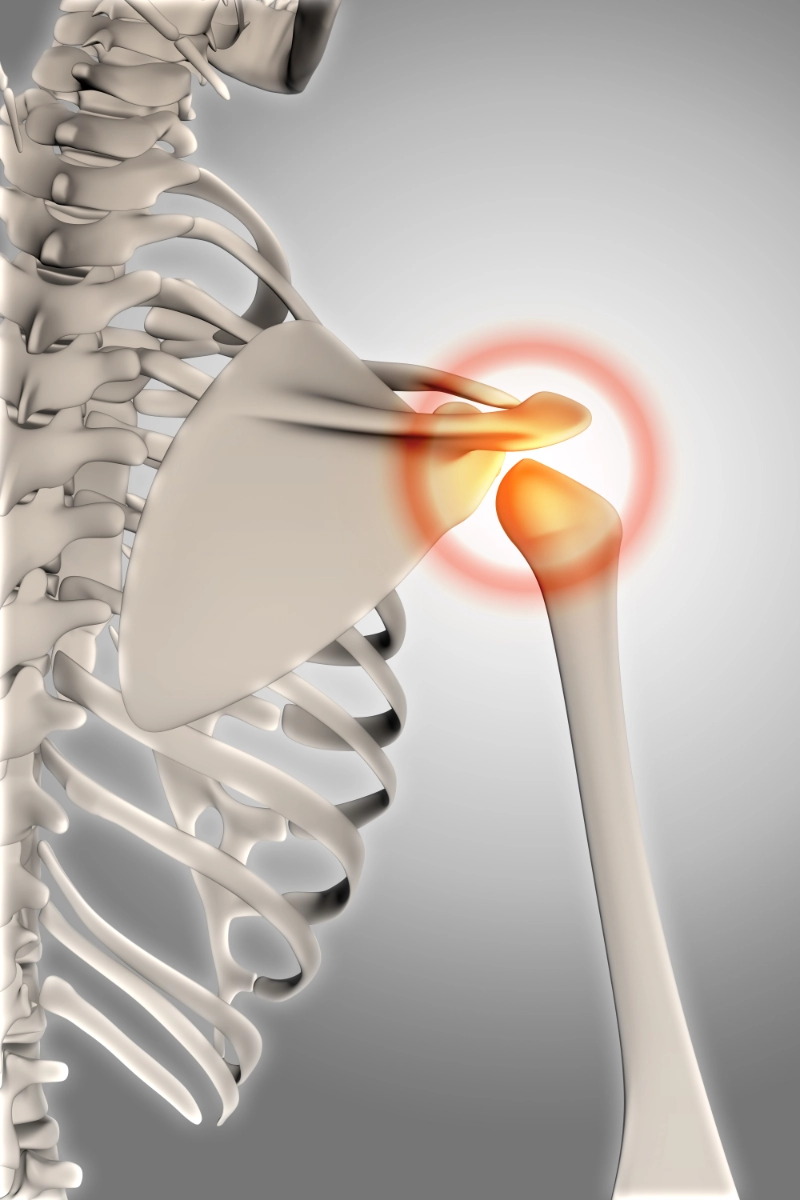
The shoulder is one of the most mobile — and most complex — joints in the body. When something goes wrong, pain can make lifting, reaching, or even sleeping difficult. At iMsk & Spine Group, we treat shoulder disorders with a warm, patient-centered approach, focusing not only on relieving pain but restoring strength, mobility, and long-term joint health. Whether your symptoms stem from arthritis, tendon irritation, nerve compression, or an injury, our team works closely with you to create a personalized treatment plan that supports real, lasting recovery.
Shoulder Joint Disorders We Treat
Acromioclavicular (AC) Joint Arthritis
What it is:
Degenerative wear of the joint between the collarbone and shoulder blade.
Degenerative wear of the joint between the collarbone and shoulder blade.
How we treat it:
We use targeted physical therapy, activity modification, anti-inflammatory strategies, AC joint injections, and shoulder strengthening to reduce pain and restore comfort.
We use targeted physical therapy, activity modification, anti-inflammatory strategies, AC joint injections, and shoulder strengthening to reduce pain and restore comfort.
Symptoms:
- Pain on top of the shoulder
- Discomfort when lifting or reaching across the body
- Swelling or tenderness
- Limited range of motion
Biceps Tendonitis
What it is:
Inflammation of the biceps tendon where it attaches at the shoulder, often caused by overuse or repetitive overhead activity.
Inflammation of the biceps tendon where it attaches at the shoulder, often caused by overuse or repetitive overhead activity.
How we treat it:
Treatment includes rest, activity modification, physical therapy, anti-inflammatory care, stretching, and targeted injections for persistent inflammation.
Treatment includes rest, activity modification, physical therapy, anti-inflammatory care, stretching, and targeted injections for persistent inflammation.
Symptoms:
- Front-of-shoulder pain
- Tenderness along the biceps groove
- Pain with lifting or rotating the arm
- Weakness or fatigue
Frozen Shoulder (Adhesive Capsulitis)
What it is:
A condition where the shoulder capsule becomes thickened and tight, limiting motion and causing significant stiffness.
A condition where the shoulder capsule becomes thickened and tight, limiting motion and causing significant stiffness.
How we treat it:
We apply gentle stretching programs, physical therapy, mobility exercises, heat therapy, and anti-inflammatory injections when needed. Slow, steady recovery is typical.
We apply gentle stretching programs, physical therapy, mobility exercises, heat therapy, and anti-inflammatory injections when needed. Slow, steady recovery is typical.
Symptoms:
- Gradual loss of shoulder mobility
- Pain with movement
- Stiffness during daily activities
- Difficulty reaching overhead or behind the back
Glenoid Labrum Tear
What it is:
A tear of the cartilage rim surrounding the shoulder socket, often caused by trauma, repetitive overhead motion, or dislocation.
A tear of the cartilage rim surrounding the shoulder socket, often caused by trauma, repetitive overhead motion, or dislocation.
How we treat it:
We focus on stabilization exercises, physical therapy, strengthening of the rotator cuff, and activity modification. Severe tears may require surgical referral, with rehab guided by our team afterward.
We focus on stabilization exercises, physical therapy, strengthening of the rotator cuff, and activity modification. Severe tears may require surgical referral, with rehab guided by our team afterward.
Symptoms:
- Clicking or catching sensation
- Instability
- Deep shoulder pain
- Weakness with lifting
Muscle Strain of the Upper Back (Trapezius Strain)
What it is:
A stretching or tearing of the trapezius muscles — commonly caused by posture issues, lifting, or tension.
A stretching or tearing of the trapezius muscles — commonly caused by posture issues, lifting, or tension.
How we treat it:
Heat, stretching, manual therapy, strengthening exercises, and posture correction help relieve symptoms and prevent recurrence.
Heat, stretching, manual therapy, strengthening exercises, and posture correction help relieve symptoms and prevent recurrence.
Symptoms:
- Upper-back or shoulder pain
- Tightness
- Muscle spasms
- Restricted movement
Osteoarthritis of the Shoulder
What it is:
Degenerative arthritis where cartilage breaks down, causing bone-on-bone friction.
Degenerative arthritis where cartilage breaks down, causing bone-on-bone friction.
How we treat it:
We provide joint-strengthening therapy, anti-inflammatory treatments, lifestyle adjustments, and targeted injections for pain relief.
We provide joint-strengthening therapy, anti-inflammatory treatments, lifestyle adjustments, and targeted injections for pain relief.
Symptoms:
- Grinding or popping sensations
- Stiffness
- Pain with movement
- Weakness
Rheumatoid Arthritis (RA) of the Shoulder
What it is:
An autoimmune condition causing inflammation of the shoulder joints.
An autoimmune condition causing inflammation of the shoulder joints.
How we treat it:
We coordinate comprehensive care including anti-inflammatory strategies, therapy to maintain mobility, gentle strengthening, and interventional procedures for flare-ups.
We coordinate comprehensive care including anti-inflammatory strategies, therapy to maintain mobility, gentle strengthening, and interventional procedures for flare-ups.
Symptoms:
- Warm, swollen joints
- Pain during rest and movement
- Morning stiffness
- Reduced mobility
Rotator Cuff Injuries / Rotator Cuff Tear
What it is:
Damage or tearing of the tendons that hold the shoulder joint in place.
Damage or tearing of the tendons that hold the shoulder joint in place.
How we treat it:
We focus on strengthening programs, scapular stabilization, mobility exercises, anti-inflammatory strategies, and injections. Larger tears may need surgical evaluation with post-operative rehab provided.
We focus on strengthening programs, scapular stabilization, mobility exercises, anti-inflammatory strategies, and injections. Larger tears may need surgical evaluation with post-operative rehab provided.
Symptoms:
- Pain when lifting the arm
- Weakness
- Night pain
- Reduced ability to reach overhead
Shoulder Impingement Syndrome
What it is:
When the rotator cuff tendons are pinched between shoulder structures, causing inflammation.
When the rotator cuff tendons are pinched between shoulder structures, causing inflammation.
How we treat it:
Treatment includes posture correction, physical therapy, anti-inflammatory care, strengthening programs, and injections when necessary.
Treatment includes posture correction, physical therapy, anti-inflammatory care, strengthening programs, and injections when necessary.
Symptoms:
- Pain when lifting the arm
- Clicking or grinding sensations
- Weakness
- Painful arc of motion
Suprascapular Neuropathy
What it is:
A nerve compression condition affecting the suprascapular nerve, often due to repetitive overhead activity or cysts.
A nerve compression condition affecting the suprascapular nerve, often due to repetitive overhead activity or cysts.
How we treat it:
Therapy includes strengthening, nerve-gliding techniques, inflammation reduction strategies, ergonomic adjustments, and targeted injections.
Therapy includes strengthening, nerve-gliding techniques, inflammation reduction strategies, ergonomic adjustments, and targeted injections.
Symptoms:
- Shoulder weakness
- Dull pain in the upper back or shoulder
- Reduced ability to rotate the arm
- Muscle atrophy in advanced cases
Weightlifter’s Shoulder (Distal Clavicular Osteolysis)
What it is:
A breakdown of the bone at the end of the collarbone — often seen in athletes who regularly bench press or lift heavy weights.
A breakdown of the bone at the end of the collarbone — often seen in athletes who regularly bench press or lift heavy weights.
How we treat it:
Treatment focuses on modifying activities, reinforcing proper form, using physical therapy to reduce stress on the AC joint, and applying anti-inflammatory measures or injections as needed.
Treatment focuses on modifying activities, reinforcing proper form, using physical therapy to reduce stress on the AC joint, and applying anti-inflammatory measures or injections as needed.
Symptoms:
- Pain near the AC joint
- Pain during pressing movements
- Tenderness along the collarbone
- Discomfort during strength training
Shoulder Joint Disorders FAQ
When should I seek medical care for shoulder pain?
If pain lasts more than a week, restricts lifting or reaching, interrupts sleep, or follows an injury, a professional evaluation is recommended.
Do shoulder conditions usually require surgery?
Most shoulder disorders are treated effectively with non-surgical care, including physical therapy, anti-inflammatory treatments, and targeted injections.
Why do shoulder injuries take so long to heal?
The shoulder is a highly mobile joint that depends on tendons and muscles for stability. Healing requires careful strengthening and time to avoid reinjury.
Why does my shoulder hurt at night?
Night pain can result from inflammation, tendon irritation, or sleep positions that place stress on the shoulder. We help identify the underlying cause and provide personalized strategies for relief.
Can shoulder pain be related to neck or upper-back issues?
Yes — neck and upper-back problems can refer pain to the shoulder. We evaluate the entire region to ensure accurate diagnosis.