



Hand and Wrist Joint Disorders
Comprehensive Treatment for Hand & Wrist Joint Disorders
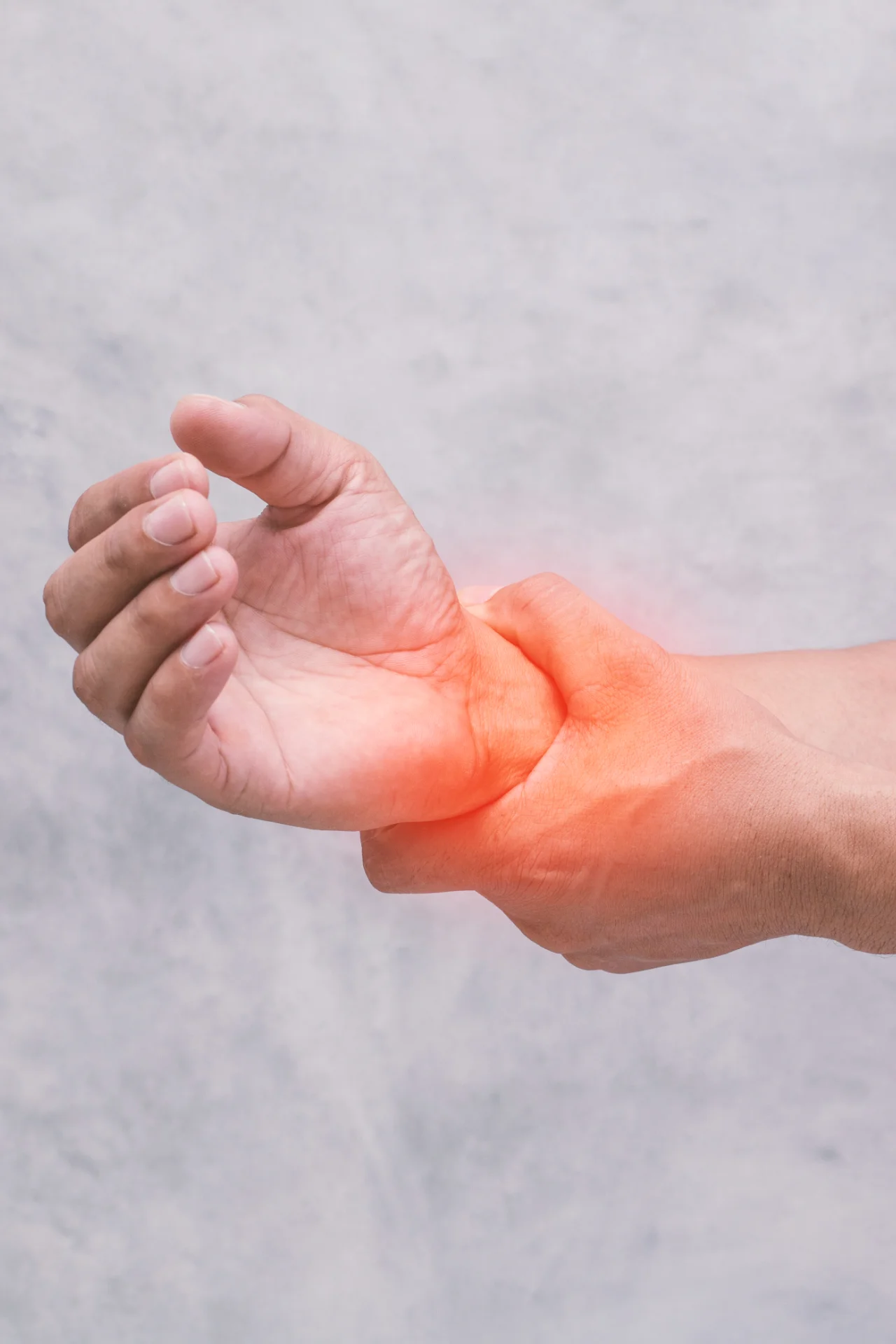
Your hands and wrists play an essential role in nearly every part of your day — from working and lifting to driving, eating, and caring for loved ones. When pain develops in these delicate joints, even simple tasks can become difficult. At iMsk & Spine Group, we take a warm, patient-first approach to diagnosing and treating hand and wrist joint conditions. With advanced evaluation, personalized treatment plans, and a team that genuinely cares, we’re committed to helping you regain comfort, strength, and mobility.
Hand & Wrist Joint Disorders We Treat
Basal Joint Osteoarthritis
What it is:
Degeneration of the joint at the base of the thumb (the carpometacarpal joint), often caused by aging or repetitive thumb use.
Degeneration of the joint at the base of the thumb (the carpometacarpal joint), often caused by aging or repetitive thumb use.
How we treat it:
We focus on relieving nerve pressure through splinting, hand therapy, ergonomic adjustments, nerve-gliding exercises, and interventional treatments when needed.
We focus on relieving nerve pressure through splinting, hand therapy, ergonomic adjustments, nerve-gliding exercises, and interventional treatments when needed.
Symptoms:
- Numbness or tingling in the thumb, index, or middle fingers
- Weak grip strength
- Hand pain that worsens at night
- Dropping objects
Carpal Tunnel Syndrome
What it is:
Compression of the median nerve as it travels through the carpal tunnel in the wrist.
Compression of the median nerve as it travels through the carpal tunnel in the wrist.
How we treat it:
Treatment is individualized and may include SI joint stabilization exercises, manual therapy, physical therapy focusing on core and pelvic alignment, activity modification, supportive bracing, and interventional treatments such as SI joint injections to reduce inflammation and improve mobility.
Treatment is individualized and may include SI joint stabilization exercises, manual therapy, physical therapy focusing on core and pelvic alignment, activity modification, supportive bracing, and interventional treatments such as SI joint injections to reduce inflammation and improve mobility.
Symptoms:
- Lower back or buttock pain
- Pain that radiates down one or both legs
- Pain that worsens with prolonged standing
- Stiffness when climbing stairs, walking uphill, or transitioning positions
- Discomfort during weight-bearing activities
De Quervain’s Tenosynovitis
What it is:
Inflammation of the tendons along the thumb side of the wrist, often caused by repetitive lifting or gripping.
Inflammation of the tendons along the thumb side of the wrist, often caused by repetitive lifting or gripping.
How we treat it:
Treatment includes rest, thumb immobilization, anti-inflammatory therapies, physical therapy, and targeted injections for persistent symptoms.
Treatment includes rest, thumb immobilization, anti-inflammatory therapies, physical therapy, and targeted injections for persistent symptoms.
Symptoms:
- Sharp pain near the thumb/wrist
- Swelling and tenderness
- Pain when forming a fist or gripping
- Difficulty lifting objects
Flexor Tendon Injuries
What it is:
Damage to the tendons that allow your fingers to bend and grip. Injuries can occur from cuts, forceful pulling, or sports trauma.
Damage to the tendons that allow your fingers to bend and grip. Injuries can occur from cuts, forceful pulling, or sports trauma.
How we treat it:
Treatment may include splinting, guided rehabilitation, and interventional treatments. Severe tendon tears may require surgical referral, with rehabilitation provided after healing.
Treatment may include splinting, guided rehabilitation, and interventional treatments. Severe tendon tears may require surgical referral, with rehabilitation provided after healing.
Symptoms:
- Inability to bend one or more fingers
- Pain and swelling
- Catching or locking sensations
- Reduced hand function
Osteoarthritis of the Hand
What it is:
Degenerative wear-and-tear arthritis affecting the finger joints or thumb.
Degenerative wear-and-tear arthritis affecting the finger joints or thumb.
How we treat it:
We use hand therapy, anti-inflammatory strategies, bracing, lifestyle adjustments, and targeted injections to reduce pain and improve function.
We use hand therapy, anti-inflammatory strategies, bracing, lifestyle adjustments, and targeted injections to reduce pain and improve function.
Symptoms:
- Stiffness
- Pain with gripping or typing
- Swollen or enlarged knuckles
- Reduced hand strength
Rheumatoid Arthritis (RA) of the Hand
What it is:
An autoimmune condition causing inflammation of the joints, often beginning in the hands.
An autoimmune condition causing inflammation of the joints, often beginning in the hands.
How we treat it:
We coordinate care using anti-inflammatory treatments, splinting, hand therapy, activity modification, and interventional pain procedures when appropriate.
We coordinate care using anti-inflammatory treatments, splinting, hand therapy, activity modification, and interventional pain procedures when appropriate.
Symptoms:
- Swollen, tender joints
- Warmth or redness
- Morning stiffness
- Reduced hand mobility
Thumb Ulnar Collateral Ligament (UCL) Injury
What it is:
A ligament injury at the base of the thumb, often caused by a fall, direct trauma, or excessive stretching of the thumb (“skier’s thumb”).
A ligament injury at the base of the thumb, often caused by a fall, direct trauma, or excessive stretching of the thumb (“skier’s thumb”).
How we treat it:
Treatment may include bracing, immobilization, hand therapy, and targeted injections. More severe ligament tears may require advanced interventions.
Treatment may include bracing, immobilization, hand therapy, and targeted injections. More severe ligament tears may require advanced interventions.
Symptoms:
- Pain and swelling around the thumb
- Difficulty pinching or gripping
- Weakness in thumb movements
- Instability in the joint
Triangular Fibrocartilage Complex (TFCC) Tears
What it is:
Damage to the cartilage structure on the small finger side of the wrist, often caused by twisting motions, heavy lifting, or falls.
Damage to the cartilage structure on the small finger side of the wrist, often caused by twisting motions, heavy lifting, or falls.
How we treat it:
Treatment includes wrist bracing, activity modification, anti-inflammatory therapies, physical therapy, and interventional injections for pain relief.
Treatment includes wrist bracing, activity modification, anti-inflammatory therapies, physical therapy, and interventional injections for pain relief.
Symptoms:
- Wrist pain on the pinky side
- Clicking, popping, or grinding
- Weak grip strength
- Pain when rotating the wrist
Trigger Digit (Trigger Finger)
What it is:
A condition where the finger tendon becomes irritated, causing painful clicking, locking, or catching when bending the finger.
How we treat it:
We use splinting, anti-inflammatory therapies, hand therapy, and targeted injections to improve tendon movement and reduce inflammation.
We use splinting, anti-inflammatory therapies, hand therapy, and targeted injections to improve tendon movement and reduce inflammation.
Symptoms:
- Finger stiffness
- Pain at the base of the finger
- Locking or “snapping” sensation
- Difficulty fully straightening the finger
Wrist Sprain
What it is:
Overstretching or tearing of the ligaments in the wrist, often due to falls, sports, or sudden twisting motions.
Overstretching or tearing of the ligaments in the wrist, often due to falls, sports, or sudden twisting motions.
How we treat it:
Treatment includes rest, bracing, physical therapy, strengthening exercises, and pain-relief techniques tailored to the severity of the injury.
Treatment includes rest, bracing, physical therapy, strengthening exercises, and pain-relief techniques tailored to the severity of the injury.
Symptoms:
- Swelling and bruising
- Pain with wrist movement
- Weakness or instability
- Difficulty gripping
Hand & Wrist Joint Disorders FAQ
How do I know if my hand or wrist pain is from a joint, tendon, or nerve problem?
Because many structures are involved in hand and wrist movement, symptoms often overlap. We perform a detailed evaluation — including movement testing, palpation, and imaging when needed — to identify the exact source of pain.
Can hand or wrist disorders heal without treatment?
Some mild sprains or inflammation may improve with rest, but persistent pain, swelling, tingling, or weakness usually requires professional care to prevent worsening or permanent dysfunction.
Do these conditions always require surgery?
No — most hand and wrist problems respond very well to conservative treatments like splinting, physical therapy, anti-inflammatory care, and targeted injections. Surgery is only considered when necessary.
Why do my hands feel stiff in the morning?
Morning stiffness can be related to arthritis, tendon inflammation, or muscle tightness. We evaluate the underlying cause to create a treatment plan that supports mobility throughout the day.
When should I see a specialist for hand or wrist pain?
You should seek evaluation if pain lasts longer than a couple of weeks, affects function, limits gripping or writing, causes numbness, or follows an injury.