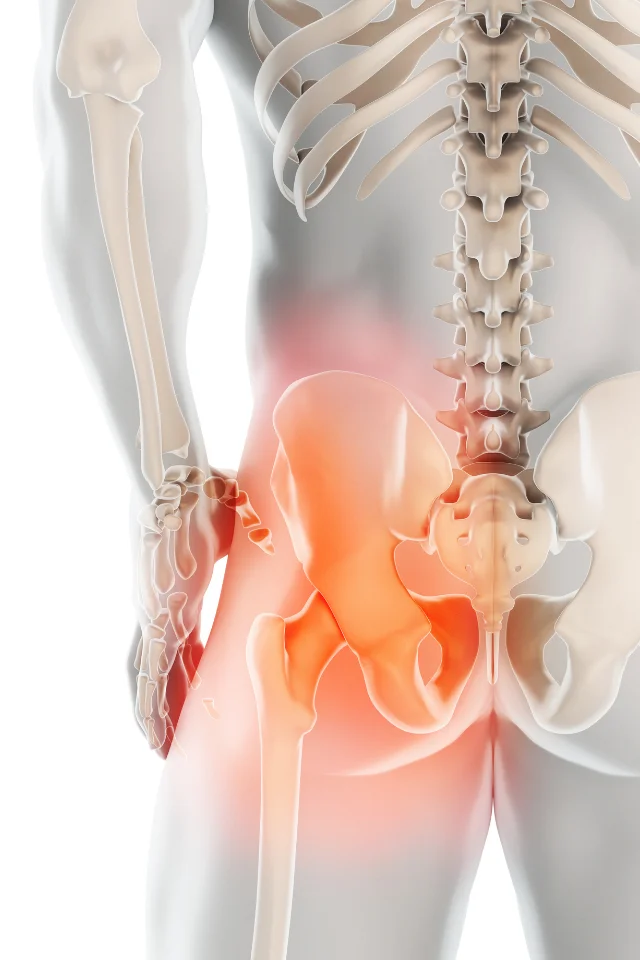






Hip Arthritis
Personalized Relief for Hip Pain, Swelling & Degeneration
What Is Hip Arthritis?
Hip Arthritis occurs when the protective cartilage within the hip joint breaks down over time. This degeneration leads to inflammation, reduced shock absorption, and increased friction between the bones of the pelvis and femur.
Several forms of arthritis can affect the hip, but osteoarthritis and inflammatory arthritis (such as rheumatoid arthritis) are the most common. Because the hip is a major load-bearing joint, pain and stiffness can significantly impact mobility and quality of life if not properly treated.
Common Causes of Hip Arthritis
Natural & Age-Related Causes
- Gradual wear and tear of cartilage
- Reduced joint lubrication with age
Lifestyle or Mechanical Factors
- Repetitive stress from sports or heavy labor
- Obesity or excess body weight
- Muscle imbalance or gait abnormalities
Medical or Structural Causes
- Previous hip injuries or fractures
- Childhood hip disorders
- Rheumatoid arthritis or other inflammatory diseases
- Genetic factors influencing cartilage structure
Understanding what contributed to your hip arthritis helps us create a customized treatment plan to slow progression and improve comfort.

Symptoms of Hip Arthritis
Hip Arthritis can cause a range of symptoms that may worsen gradually over time:
Pain Symptoms
- Deep ache in the groin, thigh, or buttock
- Pain that worsens with walking or standing
- Pain after sitting for long periods
Movement Symptoms
- Stiffness, especially in the morning
- Reduced range of motion
- Difficulty bending, rotating, or crossing the legs
- Cracking or grinding sensations (crepitus)
Functional Symptoms
- Weakness or instability
- Limping or changes in walking pattern
- Trouble climbing stairs or standing from a seated position
If untreated, symptoms may become chronic and significantly affect daily living.
How We Treat Hip Arthritis at iMsk & Spine Group
Our approach focuses on relieving pain, improving mobility, and preserving long-term joint function.
1. Conservative Care
- Anti-inflammatory medications
- Heat and cold therapy
- Assistive devices (cane, walker, or hip brace, if needed)
- Activity modification to reduce flare-ups
2. Physical Therapy & Rehabilitation
- Strengthening of hip, core, and leg muscles
- Stretching to improve flexibility
- Gait and balance training
- Joint protection techniques
3. Interventional Treatments
- Corticosteroid injections to reduce inflammation
- Ultrasound-guided hip procedures for precision
- Other advanced injections depending on the case
4. Lifestyle & Long-Term Joint Protection
- Weight management support
- Home exercise programs
- Ergonomic adjustments
- Strategies to reduce joint stress
5. Advanced Care Coordination
In cases of severe hip degeneration, we collaborate with orthopedic specialists to explore surgical options while guiding you through pre- and post-treatment rehabilitation.
Hip Arthritis FAQ
Can hip arthritis be reversed?
Why is my hip pain in the groin?
Does exercise help or hurt hip arthritis?
When are injections recommended?
Do I need a hip replacement?
How long does recovery from a flare-up take?