




Hip Bursitis
Expert Care for Hip Pain & Inflammation
What Is Hip Bursitis?
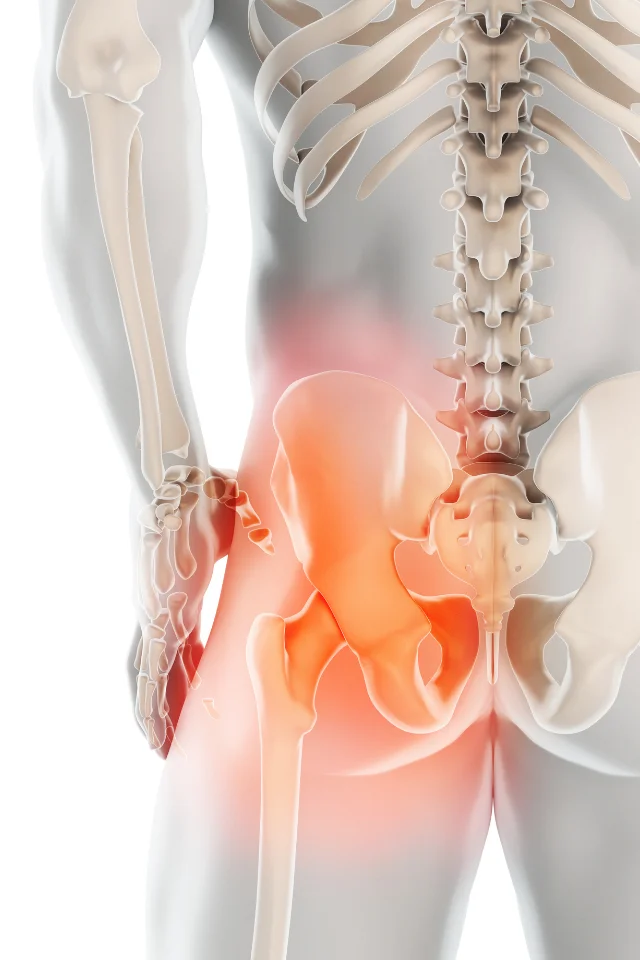
The hip contains several bursae, but the one most commonly affected is the greater trochanteric bursa — located on the outer side of the hip. When this bursa becomes inflamed, it leads to pain with movement, pressure, and activity.
This condition is especially common in:
- Athletes
- Runners
- Individuals with hip muscle weakness or imbalance
- People who stand, walk, or climb stairs frequently
Hip Bursitis can be very painful, but it is highly treatable with early intervention and a personalized approach.
Common Causes of Hip Bursitis
Overuse & Repetitive Activity
- Long-distance running
- Jumping sports
- Repeated stair climbing
- Prolonged standing or walking
Muscle Weakness or Imbalance
- Weak gluteal muscles
- Tight iliotibial (IT) band
- Poor hip alignment or gait abnormalities
Injury or Trauma
- Falls landing on the outer hip
- Direct blows during sports
- Rapid increases in training activity
Other Contributing Factors
- Leg-length differences
- Arthritis in the hip or lower back
- Prior hip surgeries
Understanding the cause helps us tailor treatment to restore optimal movement.
Symptoms of Hip Bursitis
Pain & Tenderness
- Sharp or aching pain on the outer side of the hip
- Pain that worsens with walking, climbing stairs, or standing
Nighttime Discomfort
- Pain when lying on the affected side
- Difficulty sleeping due to pressure on the hip
Movement-Related Symptoms
- Pain when crossing legs
- Pain when getting up from a chair
- Pain radiating down the outer thigh
Activity Limitations
- Limping
- Reduced ability to exercise or walk long distances
Symptoms may start gradually or after a specific injury.
How We Treat Hip Bursitis at iMsk & Spine Group
We develop personalized treatment plans to reduce inflammation, ease pain, and correct biomechanical issues.
1. Conservative Care
- Anti-inflammatory medications
- Ice or heat therapy
- Activity modification
- Proper footwear and surface changes
2. Physical Therapy & Rehabilitation
- Stretching of the IT band and hip muscles
- Strengthening of gluteal and core muscles
- Gait training
- Manual therapy to improve hip mobility
- Corrective exercises for alignment and balance
3. Interventional Treatments
- Corticosteroid injections for rapid pain relief
- Ultrasound-guided injections for accuracy
- Advanced inflammation-relief procedures if needed
4. Lifestyle & Posture Guidance
- Weight management if appropriate
- Ergonomic adjustments
- Sleep position recommendations
- Long-term home exercise program
5. Prevention Strategies
- Proper warm-up and cooldown routines
- Strengthening and stretching balance
- Gradual return-to-sport plans
Most patients experience significant improvement with a structured treatment plan.
Hip Bursitis FAQ
Is Hip Bursitis the same as hip arthritis?
Why does Hip Bursitis hurt more at night?
Can Hip Bursitis be cured?
Are injections useful for Hip Bursitis?
Yes. Steroid injections can offer rapid relief when symptoms are severe or persistent.
What happens if Hip Bursitis is not treated?
How long does recovery take?