




Lateral Epicondylitis
Expert Care for Tennis Elbow and Repetitive Strain Pain
What Is Tennis Elbow?
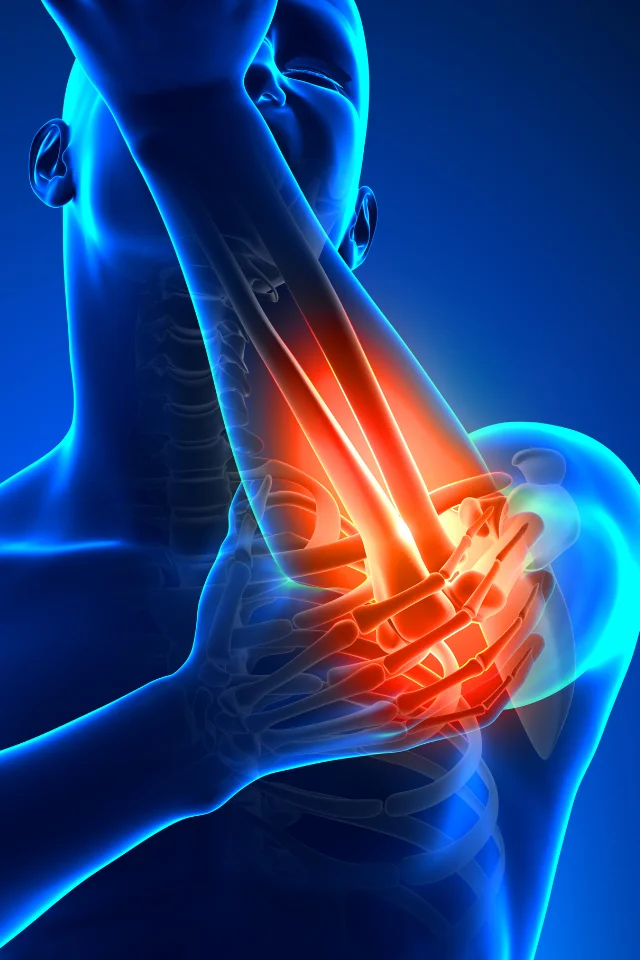
Tennis Elbow is an inflammation or microscopic tearing of the tendons that connect the forearm muscles to the lateral epicondyle — the bony bump on the outside of the elbow. Despite its name, most people who develop Tennis Elbow are not tennis players. It’s an overuse condition caused by repetitive strain on the wrist and forearm.
When these tendons become overloaded, they weaken and become painful, leading to difficulty lifting, gripping, or performing simple arm movements.
Common Causes of Tennis Elbow
Repetitive Motions
- Tennis or pickleball
- Golf
- Weightlifting
- Racquet sports
- Typing or mouse use
- Plumbing, painting, carpentry, or other tool use
Sudden Overload
- Lifting something heavy with the arm extended
- A forceful pull or twist
Age-Related Tendon Weakness
- More common in people ages 30–60
- Tendons lose elasticity over time, making them easier to irritate
Symptoms of Tennis Elbow
Rotator cuff injuries can present in different ways depending on severity:
Pain & Discomfort
- Pain on the outside of the elbow
- Pain that radiates down the forearm
- Increased pain when gripping or lifting
Movement Symptoms
- Difficulty holding objects
- Weak grip strength
- Pain when twisting (turning a doorknob, using a screwdriver)
Activity-Related Symptoms
- Pain during sports or repetitive work
- Stiffness after rest
Chronic Symptoms
- Soreness that persists for months without treatment
- Limited arm function
How We Treat Tennis Elbow at iMsk & Spine Group
We create personalized treatment plans that target the root cause while providing pain relief and functional recovery.
1. Conservative Care
- Rest and activity modification
- Ice or heat therapy
- Anti-inflammatory medications
- Elbow straps or bracing to reduce tendon stress
2. Physical Therapy
- Eccentric strengthening exercises
- Stretching of forearm muscles
- Posture and ergonomics training
- Functional training for work or sports
3. Interventional Treatments
- Corticosteroid injections for significant inflammation
- Ultrasound-guided procedures for precise tendon-targeting
- Advanced tendon therapies when appropriate
4. Return-to-Activity Planning
- Gradual return to sports
- Modification of technique to prevent reinjury
- Strength programs for long-term elbow health
5. When Further Care Is Needed
Severe or chronic cases may require advanced management, but most patients improve without surgery.
Tennis Elbow Injuries FAQ
Do I need to be an athlete to get Tennis Elbow?
How long does Tennis Elbow take to heal?
Should I rest my arm completely?
Are injections helpful?
How can I prevent Tennis Elbow in the future?
How can I prevent rotator cuff injuries during sports or exercise?