


Hip Joint Disorders
Expert Care for Hip Pain — Restoring Comfort and Mobility
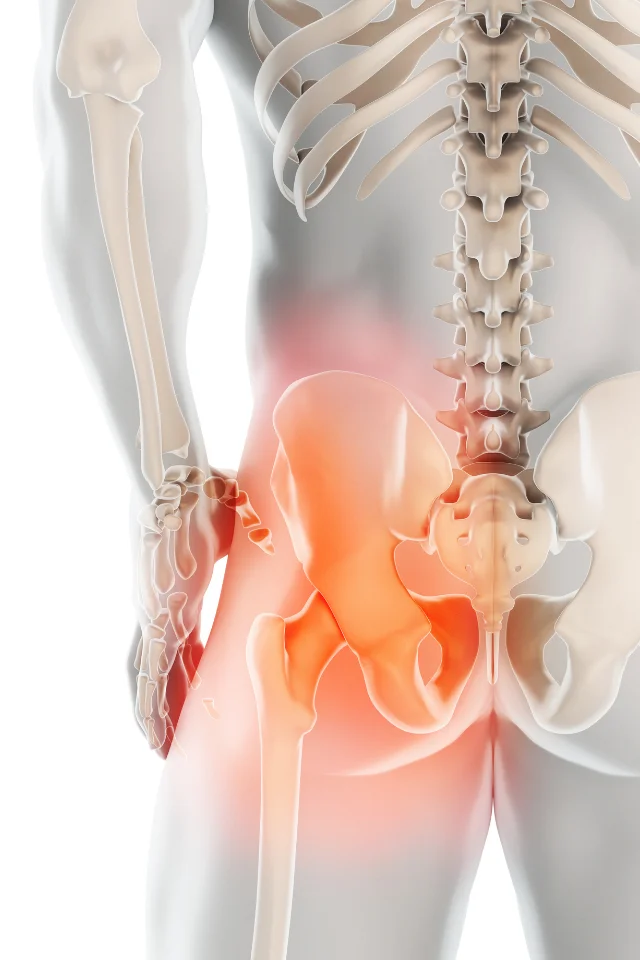
The hips provide strength, balance, and support for your entire body. When pain develops — whether from injury, inflammation, arthritis, or muscle strain — it can significantly affect your ability to walk, exercise, or perform daily tasks. At iMsk & Spine Group, we take a patient-focused, compassionate approach to diagnosing and treating hip joint disorders. Our team combines expert clinical evaluation with personalized treatment plans designed to reduce pain, restore mobility, and improve long-term joint health.
Hip Joint Disorders We Treat
Avascular Necrosis (Osteonecrosis) of the Hip
What it is:
A condition where the blood supply to the hip bone (femoral head) becomes diminished, causing bone tissue to die.
A condition where the blood supply to the hip bone (femoral head) becomes diminished, causing bone tissue to die.
How we treat it:
Early intervention is essential. Treatment may include activity modification, offloading, physical therapy, medications, interventional procedures, and referrals for advanced joint-preserving treatments when needed.
Early intervention is essential. Treatment may include activity modification, offloading, physical therapy, medications, interventional procedures, and referrals for advanced joint-preserving treatments when needed.
Symptoms:
- Deep groin or hip pain
- Pain that worsens with weight-bearing
- Limited range of motion
- Progressive difficulty walking
Bursitis of the Hip (Trochanteric Bursitis)
What it is:
Inflammation of the bursa — a small fluid-filled sac — located on the outside of the hip.
Inflammation of the bursa — a small fluid-filled sac — located on the outside of the hip.
How we treat it:
Treatment includes physical therapy, stretching, heat/ice therapy, anti-inflammatory treatments, posture correction, and targeted injections for flare-ups.
Treatment includes physical therapy, stretching, heat/ice therapy, anti-inflammatory treatments, posture correction, and targeted injections for flare-ups.
Symptoms:
- Pain on the outer hip
- Tenderness when lying on the affected side
- Pain when climbing stairs or standing
- Swelling or stiffness
Hamstring Muscle Injuries
What it is:
Strains or tears of the muscles along the back of the thigh, often caused by sudden acceleration, overstretching, or overuse.
Strains or tears of the muscles along the back of the thigh, often caused by sudden acceleration, overstretching, or overuse.
How we treat it:
Treatment focuses on rest, gradual stretching, physical therapy, strengthening, and activity modification to ensure proper healing.
Treatment focuses on rest, gradual stretching, physical therapy, strengthening, and activity modification to ensure proper healing.
Symptoms:
- Sharp pain in the thigh or buttock
- Swelling or bruising
- Stiffness
- Difficulty walking or bending the knee
Iliotibial Band Syndrome (ITBS)
What it is:
Inflammation or irritation of the iliotibial band — a long tendon running from the hip to the knee. Common in runners and cyclists.
Inflammation or irritation of the iliotibial band — a long tendon running from the hip to the knee. Common in runners and cyclists.
How we treat it:
We use stretching programs, foam rolling guidance, physical therapy, strengthening of hip stabilizers, and activity modification.
We use stretching programs, foam rolling guidance, physical therapy, strengthening of hip stabilizers, and activity modification.
Symptoms:
- Outer hip or outer knee pain
- Tightness along the IT band
- Pain during running or repetitive movement
- Clicking sensations
Inflammatory Arthritis of the Hip
What it is:
Autoimmune-related inflammation of the hip joint, often associated with conditions such as rheumatoid arthritis or ankylosing spondylitis.
Autoimmune-related inflammation of the hip joint, often associated with conditions such as rheumatoid arthritis or ankylosing spondylitis.
How we treat it:
Treatment includes coordinated care with rheumatology, anti-inflammatory strategies, physical therapy, joint-protection techniques, and interventional procedures during flare-ups.
Treatment includes coordinated care with rheumatology, anti-inflammatory strategies, physical therapy, joint-protection techniques, and interventional procedures during flare-ups.
Symptoms:
- Stiffness, especially in the morning
- Swelling or warmth around the joint
- Persistent hip or groin pain
- Reduced mobility
Labral Tear of the Hip (Acetabular Labrum Tear)
What it is:
A tear of the cartilage ring that helps stabilize the hip socket. Often caused by repetitive motion, trauma, or structural abnormalities.
A tear of the cartilage ring that helps stabilize the hip socket. Often caused by repetitive motion, trauma, or structural abnormalities.
How we treat it:
We emphasize physical therapy, hip-stabilizing exercises, activity modification, and targeted pain-relief treatments. Severe tears may require further orthopedic evaluation.
We emphasize physical therapy, hip-stabilizing exercises, activity modification, and targeted pain-relief treatments. Severe tears may require further orthopedic evaluation.
Symptoms:
- Clicking or locking of the hip
- Sharp groin pain
- Pain during twisting or pivoting
- Stiffness or instability
Muscle Strain Injuries of the Hip
What it is:
Injury or overstretching of the hip muscles, often due to sudden movement or overuse.
Injury or overstretching of the hip muscles, often due to sudden movement or overuse.
How we treat it:
Treatment includes stretching, strengthening, physical therapy, and heat/ice therapy to promote healing.
Treatment includes stretching, strengthening, physical therapy, and heat/ice therapy to promote healing.
Symptoms:
- Localized pain
- Swelling
- Tightness
- Difficulty moving the leg
Muscle Strain Injuries of the Thigh
What it is:
Injury to the quadriceps, hamstrings, or inner-thigh muscles caused by overexertion or sudden movement.
Injury to the quadriceps, hamstrings, or inner-thigh muscles caused by overexertion or sudden movement.
How we treat it:
We provide structured rehabilitation, stretching, strengthening, activity modification, and inflammation control.
We provide structured rehabilitation, stretching, strengthening, activity modification, and inflammation control.
Symptoms:
- Pain during walking or bending
- Swelling or bruising
- Muscle weakness
- Limited mobility
Osgood-Schlatter Disease
What it is:
A common overuse injury in adolescents where the tendon connecting the kneecap to the shinbone becomes irritated.
A common overuse injury in adolescents where the tendon connecting the kneecap to the shinbone becomes irritated.
How we treat it:
Treatment includes activity modification, stretching, physical therapy, ice therapy, and gradual return to sports.
Treatment includes activity modification, stretching, physical therapy, ice therapy, and gradual return to sports.
Symptoms:
- Pain just below the knee
- Swelling or tenderness
- Pain during running or jumping
- Bony bump that becomes sensitive
Osteoarthritis of the Hip
What it is:
Degeneration of the cartilage within the hip joint, leading to stiffness and pain.
Degeneration of the cartilage within the hip joint, leading to stiffness and pain.
How we treat it:
We provide strengthening, physical therapy, lifestyle changes, anti-inflammatory treatments, and injections to help manage pain and maintain mobility.
We provide strengthening, physical therapy, lifestyle changes, anti-inflammatory treatments, and injections to help manage pain and maintain mobility.
Symptoms:
- Pain in the groin, thigh, or buttock
- Stiffness in the morning or after rest
- Reduced range of motion
- Pain with walking
Sacroiliac Joint Pain
What it is:
Inflammation or irritation of the sacroiliac joint where the spine meets the pelvis.
Inflammation or irritation of the sacroiliac joint where the spine meets the pelvis.
How we treat it:
Therapy includes stabilization exercises, manual therapy, core strengthening, SI joint injections, and movement correction.
Therapy includes stabilization exercises, manual therapy, core strengthening, SI joint injections, and movement correction.
Symptoms:
- Lower back or buttock pain
- Pain that radiates into the thigh
- Difficulty standing or walking
- Stiffness
Transient Osteoporosis of the Hip
What it is:
A temporary reduction in bone density affecting the hip, often causing sudden onset groin or thigh pain. More common in middle-aged adults and pregnant women.
A temporary reduction in bone density affecting the hip, often causing sudden onset groin or thigh pain. More common in middle-aged adults and pregnant women.
How we treat it:
We recommend rest, temporary reduction of weight-bearing, physical therapy, and monitoring until bone density gradually returns to normal.
We recommend rest, temporary reduction of weight-bearing, physical therapy, and monitoring until bone density gradually returns to normal.
Symptoms:
- Sudden hip pain during weight-bearing
- Limping
- Pain that improves with rest
- Limited movement
Hip Joint Disorders FAQ
When should I see a specialist for hip pain?
If pain lasts more than a few days, affects walking, causes stiffness, wakes you at night, or follows an injury, a professional evaluation is recommended.
Do hip problems always require surgery?
No — most hip disorders can be managed with non-surgical treatments like physical therapy, stretching, lifestyle modifications, and targeted injections. Surgery is considered only when necessary.
Why does hip pain sometimes radiate to the thigh or knee?
Hip and pelvic nerves share pathways with the thigh and knee, so irritation in the hip can be felt in surrounding areas. We evaluate the entire region to accurately diagnose the source.
Can hip arthritis be prevented or slowed down?
While arthritis can’t always be prevented, maintaining a healthy weight, staying active, and strengthening hip-supporting muscles can help protect the joint and slow progression.
How long does recovery from hip injuries typically take?
Recovery depends on the severity of the injury. Many patients notice improvement within weeks to months with consistent therapy and proper guidance.
Can hip pain be related to spinal or SI joint issues?
Yes. Hip pain may originate from the lower spine or sacroiliac joint. We carefully evaluate all possible sources to ensure patients receive the right diagnosis and treatment plan.